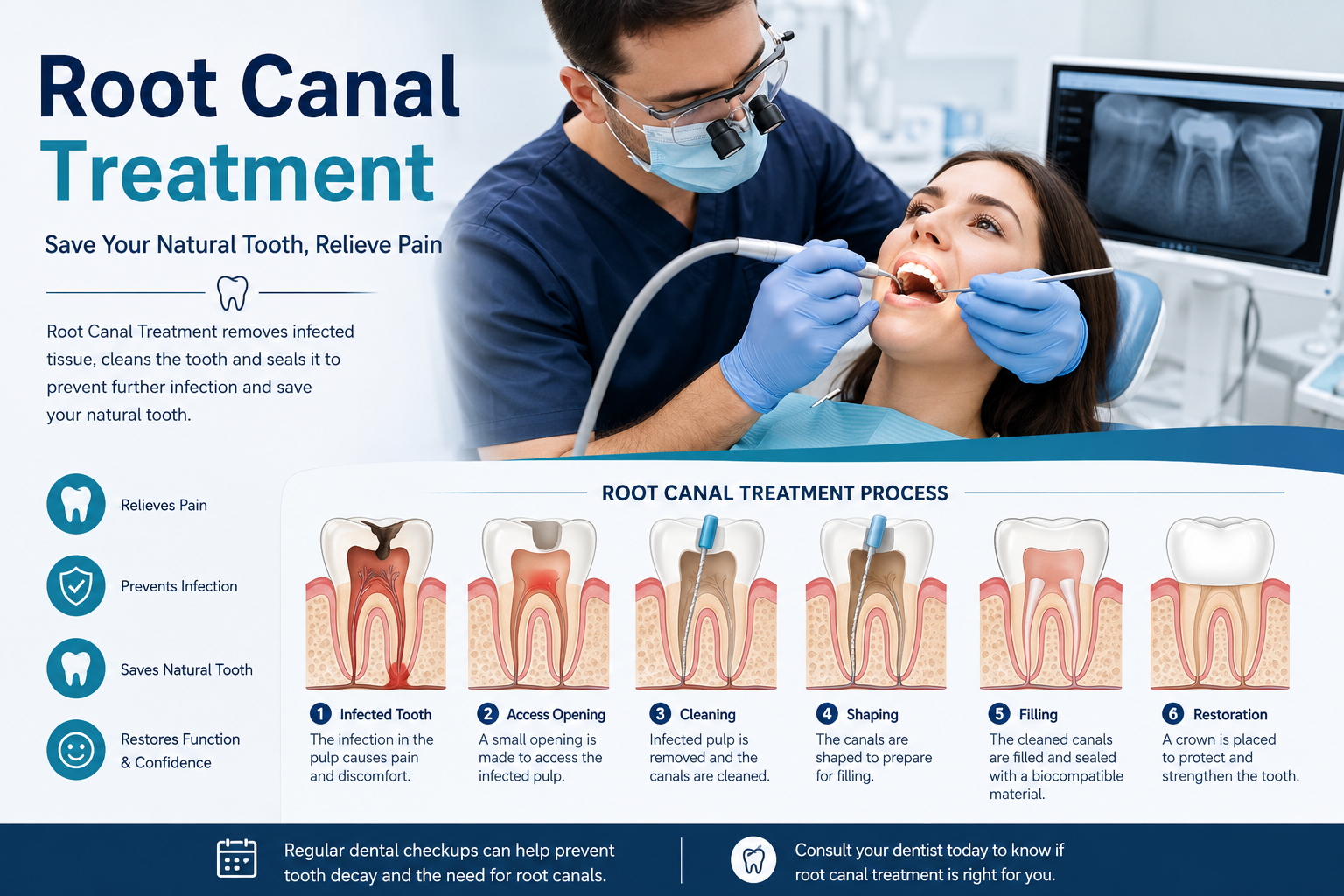
Root Canal Treatment: Everything You Need to Know About the Procedure, Benefits, Cost & Recovery
Introduction
Tooth pain can be one of the most uncomfortable experiences a person faces. In many cases, severe tooth pain is caused by an infection deep inside the tooth. When this happens, a Root Canal Treatment (RCT) is often the best way to save the natural tooth and eliminate pain.
Many people fear root canal treatment because they believe it is painful. However, with modern dental technology and anesthesia, root canal treatment is a safe, effective, and relatively comfortable procedure.
In this guide, we will explain everything you need to know about root canal treatment, including its procedure, benefits, recovery process, costs, and common myths.
What Is Root Canal Treatment?
Root Canal Treatment (RCT) is a dental procedure used to remove infected or damaged pulp from inside a tooth.
The pulp is the soft tissue inside the tooth that contains:
- Blood vessels
- Nerves
- Connective tissues
When bacteria reach the pulp due to deep decay, cracks, or trauma, infection develops. A root canal removes the infected tissue, cleans the inside of the tooth, and seals it to prevent future infection.
The primary goal of root canal treatment is to save the natural tooth instead of extracting it.
Signs You May Need a Root Canal
Not every toothache requires root canal treatment. However, some symptoms may indicate an infected tooth pulp.
Common Symptoms
Severe Tooth Pain
Persistent pain while chewing or biting can indicate deep infection.
Sensitivity to Hot and Cold
If sensitivity lasts for several seconds or minutes after consuming hot or cold foods, the pulp may be damaged.
Swollen Gums
Swelling around a tooth may signal an underlying infection.
Tooth Discoloration
A dark or gray-colored tooth may indicate nerve damage.
Gum Abscess
A pimple-like bump on the gums can be a sign of bacterial infection.
Persistent Bad Breath
Chronic infection can cause unpleasant breath odor.
Causes of Root Canal Infection
Several factors can lead to pulp infection.
Deep Cavities
Untreated tooth decay can penetrate the enamel and dentin, eventually reaching the pulp.
Cracked Teeth
Cracks allow bacteria to enter the inner layers of the tooth.
Repeated Dental Procedures
Multiple treatments on the same tooth may weaken it and increase infection risk.
Dental Trauma
Sports injuries, falls, or accidents can damage the tooth’s nerve.