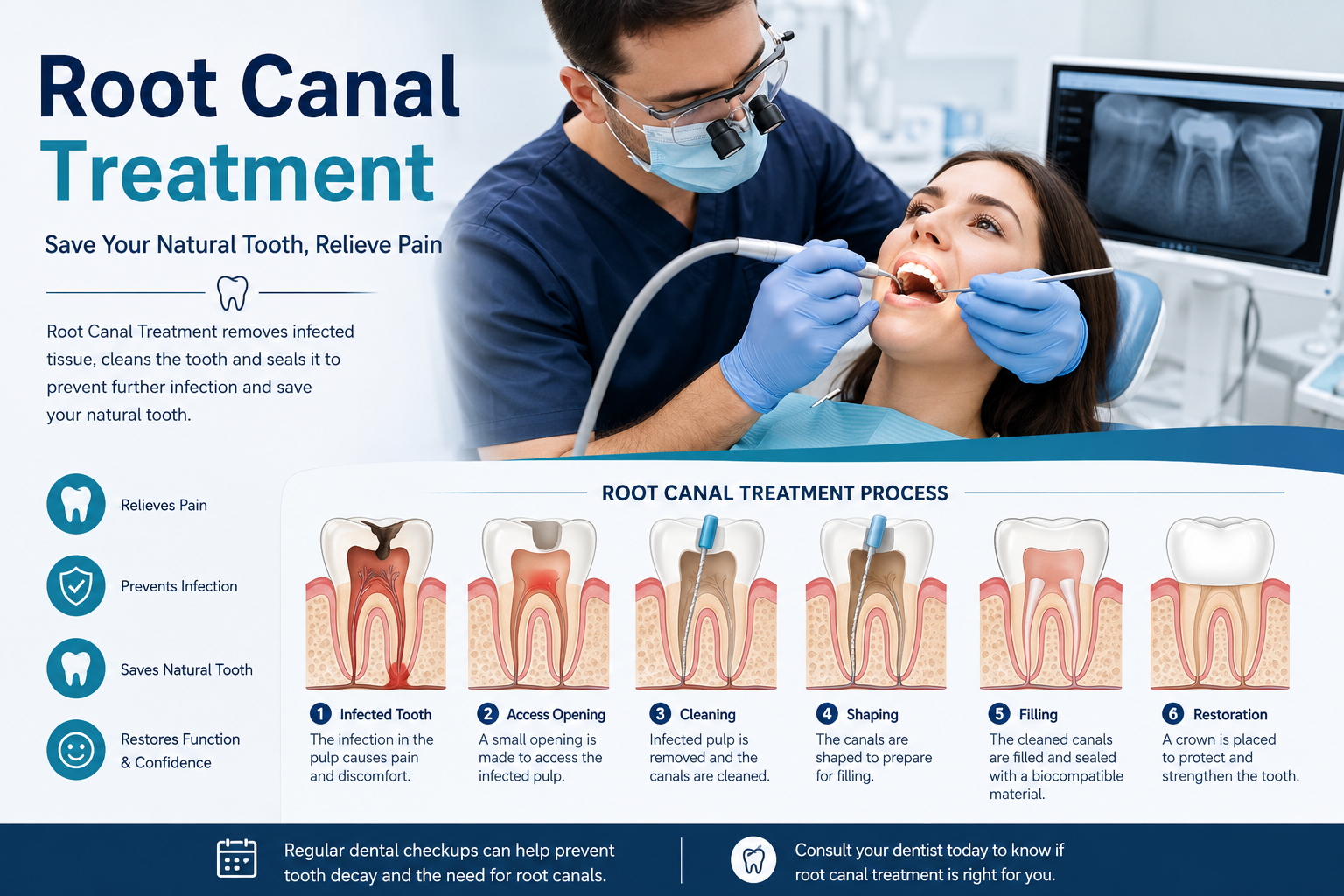
Root Canal Treatment: Everything You Need to Know About the Procedure, Benefits, Cost & Recovery
Introduction
Tooth pain can be one of the most uncomfortable experiences a person faces. In many cases, severe tooth pain is caused by an infection deep inside the tooth. When this happens, a Root Canal Treatment (RCT) is often the best way to save the natural tooth and eliminate pain.
Many people fear root canal treatment because they believe it is painful. However, with modern dental technology and anesthesia, root canal treatment is a safe, effective, and relatively comfortable procedure.
In this guide, we will explain everything you need to know about root canal treatment, including its procedure, benefits, recovery process, costs, and common myths.
What Is Root Canal Treatment?
Root Canal Treatment (RCT) is a dental procedure used to remove infected or damaged pulp from inside a tooth.
The pulp is the soft tissue inside the tooth that contains:
- Blood vessels
- Nerves
- Connective tissues
When bacteria reach the pulp due to deep decay, cracks, or trauma, infection develops. A root canal removes the infected tissue, cleans the inside of the tooth, and seals it to prevent future infection.
The primary goal of root canal treatment is to save the natural tooth instead of extracting it.
Signs You May Need a Root Canal
Not every toothache requires root canal treatment. However, some symptoms may indicate an infected tooth pulp.
Common Symptoms
Severe Tooth Pain
Persistent pain while chewing or biting can indicate deep infection.
Sensitivity to Hot and Cold
If sensitivity lasts for several seconds or minutes after consuming hot or cold foods, the pulp may be damaged.
Swollen Gums
Swelling around a tooth may signal an underlying infection.
Tooth Discoloration
A dark or gray-colored tooth may indicate nerve damage.
Gum Abscess
A pimple-like bump on the gums can be a sign of bacterial infection.
Persistent Bad Breath
Chronic infection can cause unpleasant breath odor.
Causes of Root Canal Infection
Several factors can lead to pulp infection.
Deep Cavities
Untreated tooth decay can penetrate the enamel and dentin, eventually reaching the pulp.
Cracked Teeth
Cracks allow bacteria to enter the inner layers of the tooth.
Repeated Dental Procedures
Multiple treatments on the same tooth may weaken it and increase infection risk.
Dental Trauma
Sports injuries, falls, or accidents can damage the tooth’s nerve.
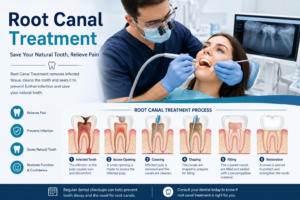
Root Canal Procedure Step by Step
Modern root canal treatment usually requires one to three visits depending on the severity of infection.
Step 1: Examination and X-Ray
The dentist examines the affected tooth and takes digital X-rays to determine the extent of infection.
Step 2: Local Anesthesia
The area is numbed to ensure a comfortable procedure.
Step 3: Access Opening
A small opening is created in the tooth to access the infected pulp.
Step 4: Removal of Infected Tissue
Special instruments are used to remove the infected pulp and bacteria.
Step 5: Cleaning and Shaping
The root canals are thoroughly cleaned and shaped.
Step 6: Filling the Canals
The cleaned canals are sealed using a biocompatible material called gutta-percha.
Step 7: Dental Crown Placement
In many cases, a crown is placed to protect and strengthen the treated tooth.
Benefits of Root Canal Treatment
Saves Your Natural Tooth
Keeping your natural tooth is always preferable to extraction.
Eliminates Pain
Root canal treatment removes the source of infection and discomfort.
Prevents Spread of Infection
Treatment stops bacteria from spreading to neighboring teeth and gums.
Restores Normal Chewing Function
Patients can comfortably eat and speak after treatment.
Improves Oral Health
Removing infection protects surrounding tissues and bone.
Is Root Canal Treatment Painful?
One of the biggest myths about root canal treatment is that it is extremely painful.
Modern root canal procedures are performed using advanced anesthesia techniques that make the treatment similar to getting a routine dental filling.
Most patients report feeling relief from pain after the procedure rather than experiencing additional discomfort.
Recovery After Root Canal Treatment
Recovery is generally quick and uncomplicated.
What to Expect
- Mild soreness for 2–3 days
- Temporary sensitivity
- Slight tenderness while chewing
Recovery Tips
Take Prescribed Medications
Follow your dentist’s instructions carefully.
Avoid Hard Foods
Do not chew hard foods on the treated tooth until fully restored.
Maintain Good Oral Hygiene
Brush and floss regularly.
Attend Follow-Up Visits
Ensure proper healing and crown placement if needed.
Root Canal Treatment vs Tooth Extraction
| Root Canal Treatment | Tooth Extraction |
|---|---|
| Saves natural tooth | Removes tooth permanently |
| Maintains jawbone structure | Can lead to bone loss |
| Better chewing function | May require implants or bridges |
| More natural appearance | Additional restoration needed |
In most situations, dentists prefer saving the natural tooth whenever possible.
How Much Does Root Canal Treatment Cost?
The cost depends on several factors:
- Tooth location
- Complexity of infection
- Need for crown placement
- Clinic location
- Dentist’s expertise
Molars generally cost more than front teeth because they contain more root canals and require additional treatment time.
How to Prevent Root Canal Problems
Prevention is always better than treatment.
Maintain Proper Oral Hygiene
Brush twice daily using fluoride toothpaste.
Floss Daily
Flossing removes plaque between teeth.
Schedule Regular Dental Checkups
Professional cleanings help detect problems early.
Limit Sugary Foods
Excess sugar increases cavity risk.
Wear a Mouthguard
Protect teeth during sports and physical activities.
Common Myths About Root Canal Treatment
Myth 1: Root Canal Treatment Is Painful
Fact: Modern anesthesia makes the procedure comfortable.
Myth 2: Extraction Is Better Than Root Canal
Fact: Saving a natural tooth is usually the best option.
Myth 3: Root Canal Causes Illness
Fact: Scientific research has found no evidence supporting this claim.
Myth 4: Recovery Takes Weeks
Fact: Most patients return to normal activities within a day or two.
Frequently Asked Questions (FAQs)
How long does a root canal take?
Typically 60–90 minutes per visit.
Can I eat after a root canal?
Yes, but wait until numbness wears off and avoid hard foods initially.
How long does a root canal-treated tooth last?
With proper care, it can last a lifetime.
Is a crown necessary after a root canal?
For many back teeth, a crown is recommended to prevent fractures.
Can root canal treatment fail?
Although uncommon, reinfection can occur if the tooth is not properly restored or maintained.
Conclusion
Root Canal Treatment is a highly effective procedure that saves infected teeth, relieves pain, and restores oral health. Rather than fearing the treatment, patients should view it as a reliable solution for preserving their natural smile. Early diagnosis and prompt treatment can prevent complications and help maintain healthy teeth for years to come.
Meta Title: Root Canal Treatment: Procedure, Benefits, Cost & Recovery Guide
Meta Description: Learn everything about Root Canal Treatment including symptoms, procedure, benefits, recovery, cost factors, and FAQs. Complete guide by dental experts.