Tooth Implant Procedure: Step-by-Step Guide to Dental Implants
Introduction
Missing teeth can affect your smile, confidence, and overall oral health. Fortunately, modern dentistry offers a permanent and natural-looking solution known as a Dental Implant. Dental implants are considered the gold standard for replacing missing teeth because they look, feel, and function like natural teeth.
Many patients are interested in dental implants but are unsure about the procedure. Questions such as “Is the treatment painful?”, “How long does it take?”, and “What should I expect during recovery?” are common.
This comprehensive guide explains the complete tooth implant procedure, benefits, recovery timeline, risks, and aftercare tips.
What Is a Dental Implant?
A dental implant is an artificial tooth root made of biocompatible titanium that is surgically placed into the jawbone.
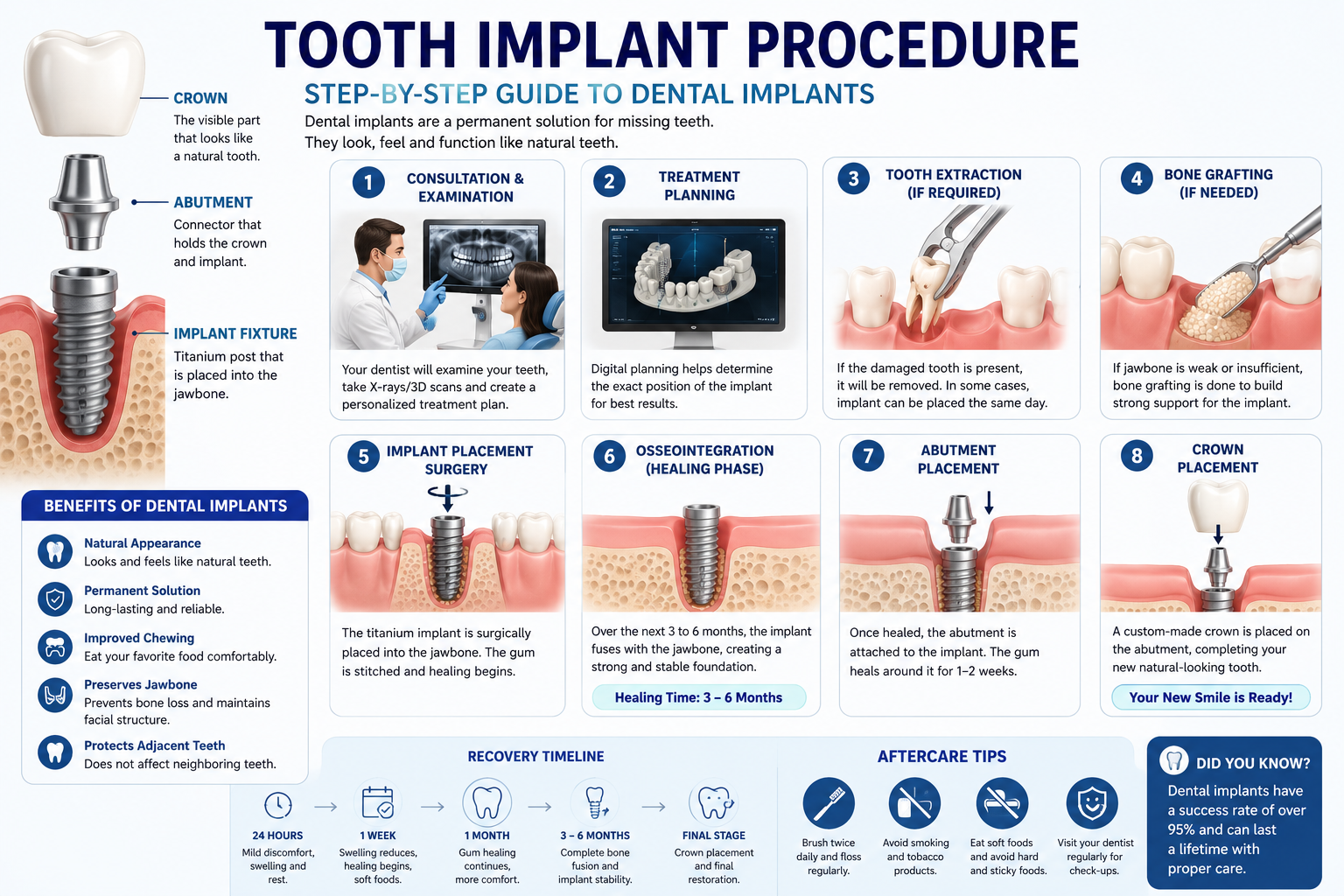
A complete dental implant consists of three parts:
Implant Fixture
The titanium post inserted into the jawbone.
Abutment
A connector that joins the implant and crown.
Dental Crown
The visible artificial tooth that looks and functions like a natural tooth.
Once healed, the implant becomes firmly attached to the jawbone through a process called osseointegration.
Why Are Dental Implants Needed?
Dental implants are recommended for individuals who have lost teeth due to:
- Tooth decay
- Gum disease
- Dental injuries
- Cracked teeth
- Congenital tooth absence
They help restore both appearance and function while preventing long-term oral health problems.
Benefits of Dental Implants
Natural Appearance
Implants closely resemble natural teeth.
Permanent Solution
Unlike dentures, implants are fixed in place.
Improved Chewing Ability
Patients can eat comfortably without worrying about slipping teeth.
Preserves Jawbone
Implants stimulate the jawbone and reduce bone loss.
Protects Adjacent Teeth
Unlike bridges, implants do not require support from neighboring teeth.
Long-Term Durability
With proper care, implants can last decades.
Who Is a Good Candidate for Dental Implants?
Most healthy adults qualify for implant treatment.
Ideal Candidates Have:
- Healthy gums
- Good oral hygiene habits
- Adequate jawbone density
- No uncontrolled medical conditions
- Non-smoking or willingness to quit smoking
If jawbone volume is insufficient, bone grafting may be recommended before implant placement.
Step-by-Step Tooth Implant Procedure
Understanding each stage helps patients feel more comfortable and confident.
Step 1: Initial Consultation and Examination
The dentist performs a complete oral examination.
Assessment Includes:
- Dental X-rays
- 3D CBCT scan
- Medical history review
- Gum health evaluation
- Bone density assessment
The dentist develops a personalized treatment plan based on the findings.
Step 2: Treatment Planning
After examination, the dentist determines:
- Number of implants needed
- Implant position
- Bone graft requirements
- Timeline of treatment
Digital imaging allows highly accurate implant placement planning.
Step 3: Tooth Extraction (If Required)
If the damaged tooth is still present, it may need to be removed before implant placement.
In some cases, immediate implant placement is possible on the same day as extraction.
Step 4: Bone Grafting (If Necessary)
Patients with insufficient jawbone may require bone grafting.
Why Bone Grafting Is Needed
The implant needs adequate bone support to remain stable.
Healing Time
Bone graft healing usually takes:
- 3 to 6 months
depending on the complexity of the case.
Step 5: Implant Placement Surgery
This is the most important stage of the procedure.
What Happens During Surgery?
Local Anesthesia
The area is completely numbed.
Small Gum Incision
The dentist creates a small opening in the gum tissue.
Implant Insertion
The titanium implant is carefully placed into the jawbone.
Gum Closure
The gum is stitched to promote healing.
Duration
A single implant placement generally takes:
- 30 to 60 minutes
Step 6: Osseointegration (Healing Phase)
After placement, the implant gradually fuses with the jawbone.
This process is called:
Osseointegration
During this stage, the implant becomes strong enough to support chewing forces.
Healing Time
Typically:
- 3 to 6 months
depending on bone quality and patient health.
Step 7: Abutment Placement
Once healing is complete, the dentist attaches the abutment.
The abutment serves as the connection between the implant and crown.
Procedure
- Minor gum opening
- Abutment attachment
- Healing for 1–2 weeks
Step 8: Dental Crown Placement
The final stage is placing the custom-made crown.
Crown Creation
The dentist takes impressions or digital scans.
A dental laboratory fabricates a crown that matches:
- Shape
- Size
- Color
- Bite alignment
Final Attachment
The crown is secured onto the abutment, completing the restoration.
Does Dental Implant Surgery Hurt?
One of the biggest concerns among patients is pain.
During Surgery
Local anesthesia prevents pain during the procedure.
After Surgery
Patients may experience:
- Mild swelling
- Minor discomfort
- Slight bruising
Most symptoms improve within a few days and can be managed with prescribed medications.
Recovery Timeline
First 24 Hours
- Mild bleeding
- Swelling
- Rest recommended
First Week
- Soft foods
- Improved comfort
- Initial healing
First Month
- Gum tissues continue healing
3–6 Months
- Complete osseointegration occurs
Final Restoration
- Permanent crown placement
Foods to Eat After Implant Surgery
Recommended Foods
- Yogurt
- Soup
- Mashed potatoes
- Smoothies
- Scrambled eggs
- Soft fruits
Foods to Avoid
- Hard candies
- Nuts
- Chips
- Sticky foods
- Extremely hot foods
Risks and Complications
Dental implants have a very high success rate, but complications can occasionally occur.
Possible Risks
- Infection
- Implant failure
- Nerve irritation
- Sinus complications (upper jaw implants)
- Delayed healing
Choosing an experienced implant dentist significantly reduces these risks.
How Long Do Dental Implants Last?
Dental implants are among the longest-lasting dental restorations available.
Average Lifespan
- Implant fixture: 20+ years or lifetime
- Crown: 10–15 years or longer
Proper care greatly increases longevity.
Dental Implant Aftercare Tips
Brush Twice Daily
Maintain excellent oral hygiene.
Floss Daily
Clean around the implant carefully.
Avoid Smoking
Smoking increases implant failure risk.
Attend Regular Dental Checkups
Professional monitoring ensures long-term success.
Wear a Night Guard
Protect implants from grinding damage.
Frequently Asked Questions (FAQs)
How long does the entire implant procedure take?
Most treatments take between 3 and 6 months, depending on healing requirements.
Can dental implants replace multiple teeth?
Yes. Implants can replace one tooth, several teeth, or an entire arch.
Are dental implants safe?
Yes. Dental implants are considered one of the safest and most predictable dental procedures.
What is the success rate of dental implants?
Modern dental implants have a success rate of over 95%.
Can implants get cavities?
No. Implants cannot develop cavities, but gum disease around implants is still possible.
Conclusion
The tooth implant procedure is a reliable and long-lasting solution for replacing missing teeth. From the initial consultation to the final crown placement, every step is designed to restore your smile, improve oral function, and preserve jawbone health. Although the process takes several months, the results can last for decades and significantly improve quality of life.
If you are considering dental implants, schedule a consultation with an experienced implant dentist to determine whether this treatment is right for you.